跳至主要內容

印度紫檀

Pterocarpus macrocarpus
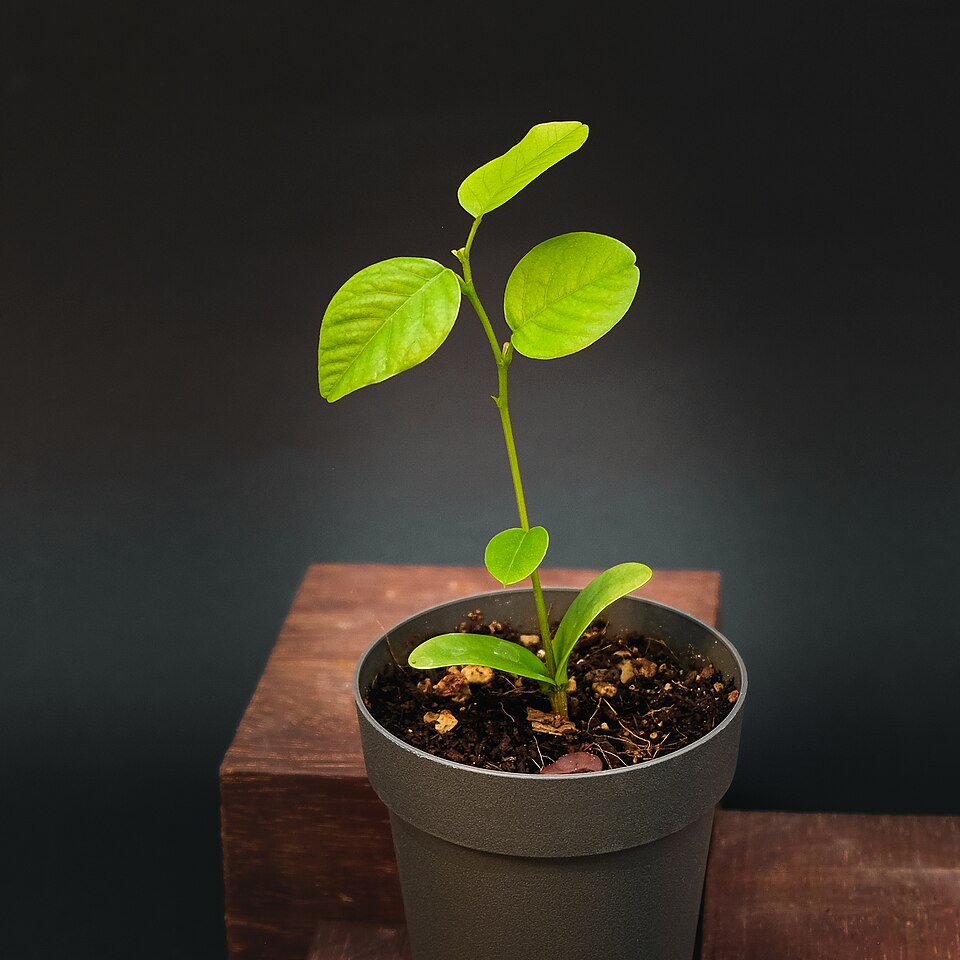
科:Fabaceae (Leguminosae)·屬:Pterocarpus·別名:紫檀、Padauk
印度紫檀 1印度紫檀 2

植物簡介

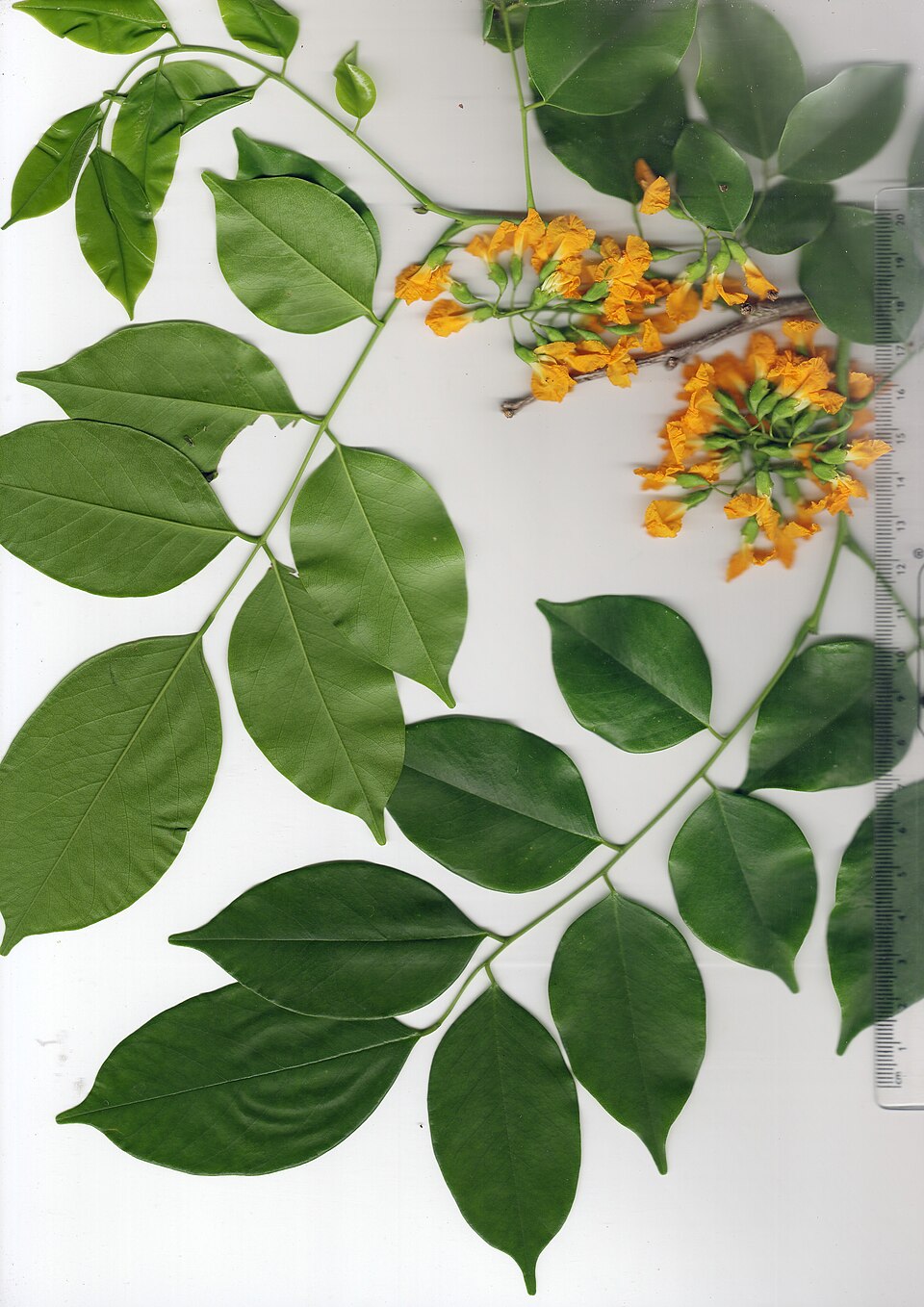
Growth Form: Deciduous tree with a rounded or spreading crown. Leaf fall occurs during the dry season. Habitat: This species occurs in dry, open Dipterocarp forests that are deciduous or semi-deciduous. It is found at altitudes of up to 700 m and locations where annual rainfall is 1,000 - 2,000 mm. Populations have dwindled due to overexploitation for its timber and conversion of forests to farmland. Trunk: Young trees have pale brown, slightly fissured bark, while mature trees have dark brown to grey, scaly bark. The fibrous inner bark is reddish brown and contains scattered drops of red sap. Foliage: Compound leaves (15 - 25 cm long) are odd-pinnate with 7 - 13 alternate leaflets. Leaflets are elliptic with rounded bases and pointed tips (2 - 3.5 cm wide, 4 - 7.5 cm long). Flowers: Pea-like flowers consist of 4 - 5 petals with wavy margins (1.4 - 1.7 cm wide). Flowers are arranged in axillary panicles (a branched inflorescence emerging from the leaf axils) or racemes (spike-like inflorescences with flowers borne on stalks). In the tropics, flowering occurs from February to April. Fruits: Disc-shaped, indehiscent pod with a wavy, membranous wing surrounding its perimeter (4 - 7 cm wide). The central compartment of the pod contains 1 - 4 smooth, brown to red-brown seeds (0.9 cm long). It is classified as a samara. Fruits are produced from July to December. Landscaping: This species provides excellent shade, has strong branches and produces relatively small amounts of litter. Each year, massive amounts of yellow flowers cover the canopy and help to brighten the landscape. It would be ideal as an amenity tree in parks and large gardens. Mature trees grown in clay or wet soils have large spreading roots that could destroy nearby pavement. Cultivation: This species is not commonly cultivated and relatively little is known about its growth requirements. Pterocarpus species typically produce a large number of seeds. Germination will occur faster if the seeds are removed from the fruit. However, extracting the seeds is difficult, so they are often planted while still in the fruit. Seeds should be first soaked in warm water (35 - 40 degrees Celsius) before planting. Plant in well-drained sandy loam. Propagation: Propagate by seed or stem cutting. Etymology: The genus name " Pterocarpus " refers to the winged fruits of species in this genus. It is derived from 2 Greek words, "pteron" which means wing and "karpos" meaning fruit. The species epithet " macrocarpus " comes from the Greek words "macro" meaning large and "karpos" meaning fruit.

生長條件

日照

全日照

土壤

壤土、排水良好

濕潤排水良好

適合氣候

南部適種

H1a|熱帶植物

尺寸

15 公尺 至 30 公尺

冠幅 —

照顧指南

栽培方式

Growth Form: Deciduous tree with a rounded or spreading crown. Leaf fall occurs during the dry season. Habitat: This species occurs in dry, open Dipterocarp forests that are deciduous or semi-deciduous. It is found at altitudes of up to 700 m and locations where annual rainfall is 1,000 - 2,000 mm. Populations have dwindled due to overexploitation for its timber and conversion of forests to farmland. Trunk: Young trees have pale brown, slightly fissured bark, while mature trees have dark brown to grey, scaly bark. The fibrous inner bark is reddish brown and contains scattered drops of red sap. Foliage: Compound leaves (15 - 25 cm long) are odd-pinnate with 7 - 13 alternate leaflets. Leaflets are elliptic with rounded bases and pointed tips (2 - 3.5 cm wide, 4 - 7.5 cm long). Flowers: Pea-like flowers consist of 4 - 5 petals with wavy margins (1.4 - 1.7 cm wide). Flowers are arranged in axillary panicles (a branched inflorescence emerging from the leaf axils) or racemes (spike-like inflorescences with flowers borne on stalks). In the tropics, flowering occurs from February to April. Fruits: Disc-shaped, indehiscent pod with a wavy, membranous wing surrounding its perimeter (4 - 7 cm wide). The central compartment of the pod contains 1 - 4 smooth, brown to red-brown seeds (0.9 cm long). It is classified as a samara. Fruits are produced from July to December. Landscaping: This species provides excellent shade, has strong branches and produces relatively small amounts of litter. Each year, massive amounts of yellow flowers cover the canopy and help to brighten the landscape. It would be ideal as an amenity tree in parks and large gardens. Mature trees grown in clay or wet soils have large spreading roots that could destroy nearby pavement. Cultivation: This species is not commonly cultivated and relatively little is known about its growth requirements. Pterocarpus species typically produce a large number of seeds. Germination will occur faster if the seeds are removed from the fruit. However, extracting the seeds is difficult, so they are often planted while still in the fruit. Seeds should be first soaked in warm water (35 - 40 degrees Celsius) before planting. Plant in well-drained sandy loam. Propagation: Propagate by seed or stem cutting. Etymology: The genus name " Pterocarpus " refers to the winged fruits of species in this genus. It is derived from 2 Greek words, "pteron" which means wing and "karpos" meaning fruit. The species epithet " macrocarpus " comes from the Greek words "macro" meaning large and "karpos" meaning fruit.

修剪建議

Pruning group 1 (Light pruning) — 基於植物形態自動推斷,非 RHS 官方分類。 大型喬木,僅需移除枯枝、病枝、交叉枝及方向不當的枝條。 熱帶環境下無明顯休眠期,全年皆可進行修剪。

繁殖方法

Seed, Stem Cutting

適合場景

庭院造景

學名異名

  • Pterocarpus cambodianus var. parviflorus
  • Lingoum
  • Lingoum
  • Pterocarpus pedatus
  • Abrus glaucinum
  • Pterocarpus gracilis var. brevipes
  • Pterocarpus macrocarpus var. oblongus
  • Lingoum parviflorum
  • Lingoum cambodianum
  • Lingoum pedatum
  • Lingoum oblongum