三角葉西番蓮
Passiflora suberosa
植物簡介
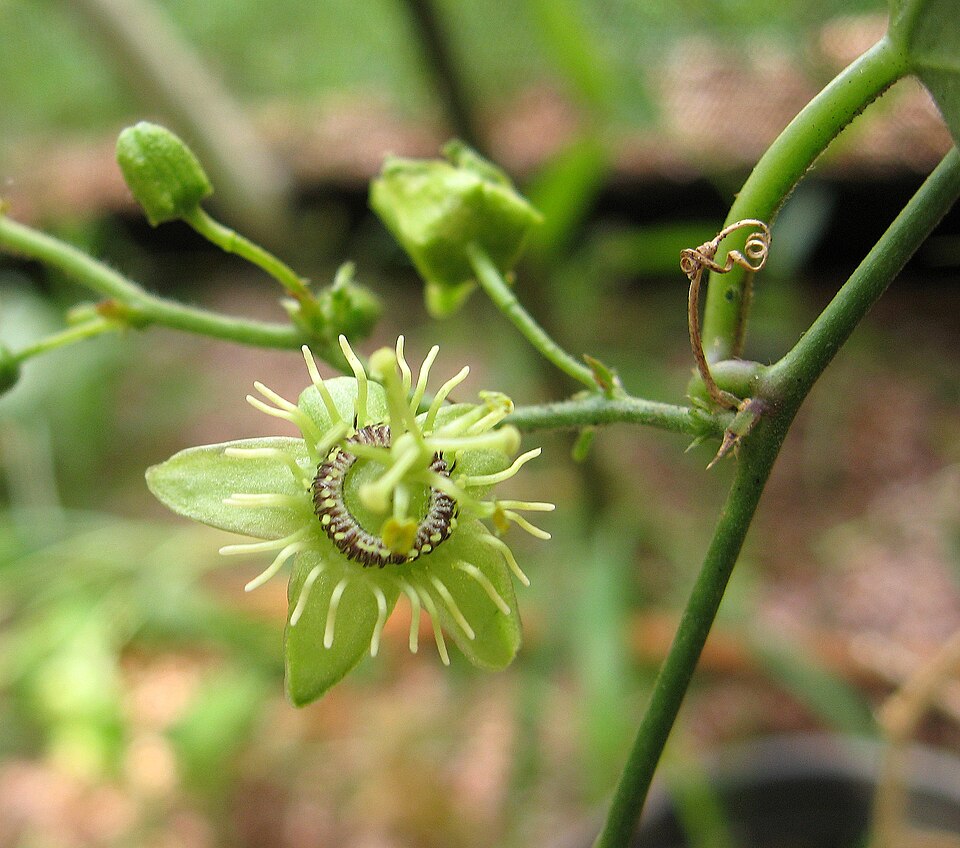
An interesting characteristic of P. suberosa is the variable shape of its leaves. From lobed to lanceolate, broad to narrow, small to large, all these different-shaped leaves are very often all found on a single plant. Flowers are small and greenish, developing into globose fruits that ripen from green to dark purplish-black and are edible. Considered by some as a weedy invasive species, P. suberosa can quickly overgrow and smother other plants, its tendrils winding around the stems and leaves of other plants in order to climb up. This enables this sun-loving plant to obtain greater exposure to sunlight. Yet, there are others who use this climber as an informal groundcover or low-climbing vine in their gardens. In addition, P. suberosa has been recognised to have ecological value, having been observed as both a butterfly nectar plant, as well as a host plant for caterpillars of butterflies including the Tawny Coster ( Acraea violae ), Gulf Fritillary ( Agaulis vanillae ), Julia Heliconian ( Dryas iulia ), Mexican Silverspot ( Dione moneta ) and Zebra Heliconian ( Heliconius charithonia ). It has also been observed to support other wildlife, such as birds and bees.
生長條件
半日照、全日照
—
濕潤排水良好
南部適種
H1a|熱帶植物
—
冠幅 —
照顧指南
An interesting characteristic of P. suberosa is the variable shape of its leaves. From lobed to lanceolate, broad to narrow, small to large, all these different-shaped leaves are very often all found on a single plant. Flowers are small and greenish, developing into globose fruits that ripen from green to dark purplish-black and are edible. Considered by some as a weedy invasive species, P. suberosa can quickly overgrow and smother other plants, its tendrils winding around the stems and leaves of other plants in order to climb up. This enables this sun-loving plant to obtain greater exposure to sunlight. Yet, there are others who use this climber as an informal groundcover or low-climbing vine in their gardens. In addition, P. suberosa has been recognised to have ecological value, having been observed as both a butterfly nectar plant, as well as a host plant for caterpillars of butterflies including the Tawny Coster ( Acraea violae ), Gulf Fritillary ( Agaulis vanillae ), Julia Heliconian ( Dryas iulia ), Mexican Silverspot ( Dione moneta ) and Zebra Heliconian ( Heliconius charithonia ). It has also been observed to support other wildlife, such as birds and bees.
Pruning group 12 (Moderate climber) — 基於植物形態自動推斷,非 RHS 官方分類。 中等攀緣植物,花後輕剪整形。 熱帶環境下無明顯休眠期,全年皆可進行修剪。
Seed
適合場景
學名異名
- Passiflora pallida
延伸閱讀

植物修剪入門:為什麼要修剪、需要什麼工具?
修剪是園藝中最基本也最重要的技能之一。許多觀賞灌木和喬木其實可以自由生長,不一定需要經常修剪,但偶爾你可能需要控制植株大小、移除枯死或不美觀的枝條、增加植株活力、改善株型,或維持健康的狀態以促進開花和結果。

RHS 修剪分組系統:13 組分類讓你精準掌握修剪時機
英國皇家園藝學會(RHS)將灌木、喬木和攀緣植物的修剪需求歸納為 13 個基本組別,外加玫瑰專屬的 8 個分組。每一種植物都對應到特定的修剪組別,只要知道你的植物屬於哪一組,就能掌握正確的修剪時機和方法。以下是各組的完整說明。

鐵線蓮修剪指南:依據花期分三組,掌握時機就不難
鐵線蓮以「難修剪」聞名,但其實只要知道你的鐵線蓮屬於哪個花期組別,修剪就變得非常簡單。關鍵在於了解它什麼時候開花——花期決定了修剪的時機和強度。